

Lock Change Checklist
A step-by-step checklist for businesses and property managers: when to rekey, when to replace, and how to document the chain of custody.
Get the checklist
When an employee leaves with a key or a tenant vacates a unit, businesses and property managers face the same question: rekey, replace, or upgrade? This guide covers every option from bulk rekeying to master key hierarchies, restricted keyways, and electronic access control.
Each guide targets a specific scenario a property manager or business owner encounters when managing key access at scale.
A step-by-step checklist for businesses and property managers: when to rekey, when to replace, and how to document the chain of custody.
Get the checklist
How pin-tumbler master key hierarchies work, when to commission one, and the total cost of ownership vs individual keying.
Explore master keys
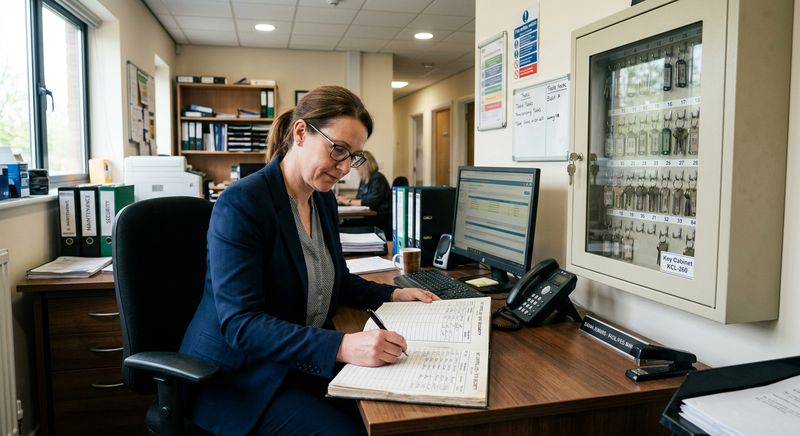
Restricted keyways, electronic key cabinets, and cloud-based key management platforms that give auditable control over every copy made.
Learn about key control
How apartment complexes, office parks, and campus facilities schedule and price bulk rekeying to minimize cost and disruption.
Plan a bulk rekeyBusinesses and property managers should change locks after every employee departure with key access, each tenant move-out, and any suspected unauthorized key duplication. The three main strategies are rekeying (cheapest, hardware stays), restricted keyways (prevents unauthorized copies), and electronic access control (eliminates rekeying entirely by deactivating credentials in software). The right strategy depends on property size, staff turnover rate, and how much key accountability you need between audits.
A commercial property creates dozens of key-access events every year. Each one represents a potential security gap if not tracked and managed. The scenarios that most commonly trigger a lock change are:
| Trigger | Recommended Action | Urgency |
|---|---|---|
| Employee with key exits | Rekey or deactivate access credential | Within 24 hours |
| Tenant move-out | Rekey entry cylinder, update key log | Before new tenant arrives |
| Lost key (common area) | Rekey affected cylinders | Immediately |
| Lost master key | Rekey entire affected keying tier | Immediately |
| Suspected unauthorized copy | Rekey or upgrade to restricted keyway | Within 48 hours |
| Annual security review | Audit key log; rekey as indicated | Scheduled |
The right approach depends on your property size, how frequently access events occur, and how much control you need over key duplication between audits.
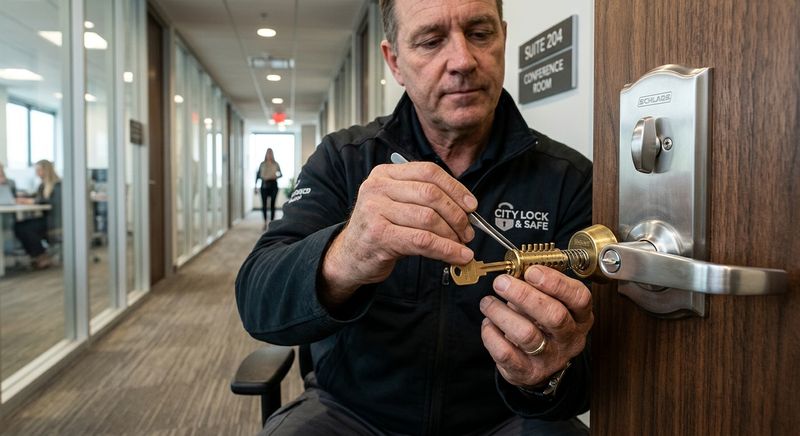
The locksmith removes the existing cylinder, replaces the pin tumblers to a new key cut, and the old key no longer operates the lock. The hardware stays in place.
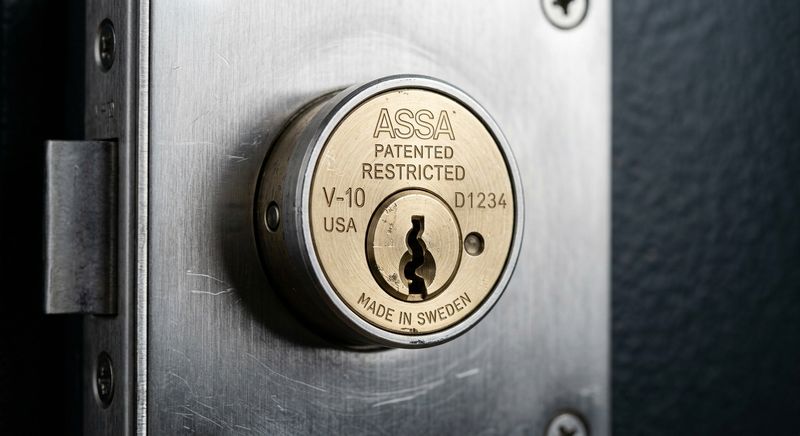
A proprietary key profile that hardware stores cannot duplicate. Only the authorized locksmith dealer can cut new keys, giving you a documented chain of custody for every copy.
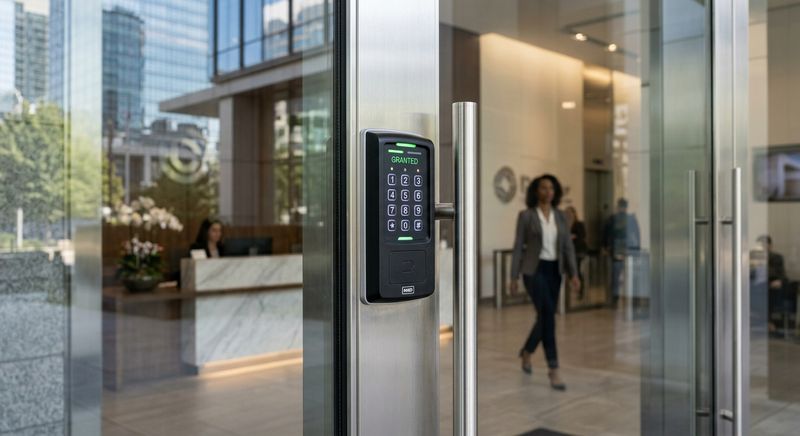
Keycards, PIN codes, or mobile credentials replace physical keys. Access is deactivated in software the moment a person's employment or tenancy ends.

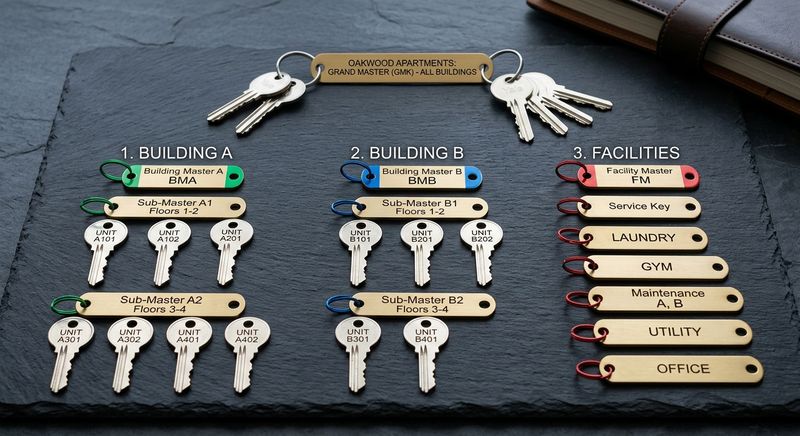
A master key system uses a hierarchical pin-tumbler layout so one key opens every lock on a property while individual keys open only designated doors. The economics make sense when:
The risk with master key systems is that a compromised master key requires rekeying the entire hierarchy for the affected tier. This is why most security consultants pair master key systems with a restricted keyway, ensuring unauthorized copies cannot be made between scheduled audits.
Read master key guide →Volume pricing applies when a single locksmith vendor handles a multi-unit or multi-door job. All figures are starting estimates as of 2026.
Five decisions that determine the scope, cost, and timeline of any business or property management lock change project.
Identify lock grades (ANSI 1, 2, or 3), cylinder brands, and any existing keying hierarchies before calling a locksmith.
Map who needs access to which doors. This determines whether a flat rekey, a master key system, or a hybrid approach is appropriate.
Rekey for routine turnover. Restricted keyways when key duplication control matters. Electronic access for high-velocity credential changes.
Request a line-item quote: mobilization fee + per-cylinder cost + parts. Volume discounts typically apply above 10 cylinders.
Record every key issued with recipient name, issue date, and return date. Schedule the next review before it is needed.

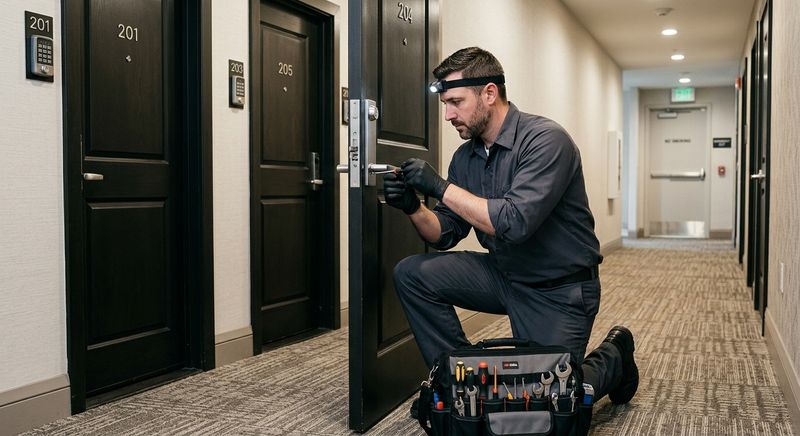
Residential and commercial property managers operate on a recurring schedule of move-outs, make-readies, and new tenancies. An industry-standard rekey protocol reduces liability and keeps vacancy periods short:

Businesses face a specific lock-change scenario that residential property managers do not: the departing employee who had physical key access to the office, server room, or supply area. Best-practice offboarding includes:
For businesses with high staff turnover, electronic access control offers a structural advantage: credentials are deactivated in a single system action with no locksmith visit required. The higher upfront cost frequently offsets within two to three years of avoided rekey visits on high-turnover floors.
Compare electronic vs physical access →The single most common oversight in commercial key management: assuming a standard key cannot be copied.
The hardware behind commercial lock change decisions: cylinders, control systems, and access readers.
Feedback from facilities managers and property owners who used this guide to plan their commercial security upgrades.
"The restricted keyway comparison alone saved us from a costly mistake. We were about to re-key 80 apartments with standard cylinders. After reading this, we upgraded to a controlled system and haven't had a copy problem since."

"The step-by-step checklist is exactly what our offboarding process was missing. We now rekey within 24 hours of any employee exit and have had zero security incidents since implementing this."

"Clear, direct, no upsell pressure. I finally understand the real cost difference between rekeying every cycle vs. investing in a master key system. Made the right call for our office park based on this breakdown."

"Finally a resource written for people who manage buildings, not homeowners locking themselves out. The multi-unit rekey pricing guide was spot-on for what we paid."

Most security consultants recommend reviewing lock access after every employee departure with key access, after any security incident, and at each lease renewal for commercial tenants. A restricted-keyway system or electronic key control removes the need for full rekeying on every departure by preventing unauthorized key duplication between audits.
A master key system uses a hierarchical pin-tumbler layout so one key can open every lock on a property while individual keys open only designated doors. It is ideal for multi-unit buildings, office suites, and campuses where different personnel need tiered access. Cost ranges from $600 to $2,500 or more for installation depending on the number of doors and key levels.
A restricted keyway is a proprietary key profile that hardware stores cannot duplicate without authorization from the registered keyholder. Brands like Medeco, Mul-T-Lock, and ASSA Abloy Control offer restricted systems. Only licensed locksmiths authorized by the manufacturer can cut new keys, giving property managers documented control over who holds a copy at any time.
Yes, substantially. Rekeying a standard cylinder costs approximately $15 to $40 per unit in volume, while full replacement runs $80 to $250 per door. For a 50-unit building, the difference can exceed $10,000 per turnover cycle. Rekeying is the right choice whenever the hardware is in serviceable condition.
Electronic access control eliminates rekeying entirely: access credentials are deactivated in software the moment employment or tenancy ends. The upfront cost is higher ($300 to $800 per door) but total cost of ownership over three to five years typically favors electronic access for properties with more than 30 access points or high staff turnover.
Standard protocol: collect all issued keys at checkout, rekey the entry cylinder and any common-area cylinders the tenant held, issue new keys to the incoming tenant, and update the key log. If the previous tenant cannot return all keys, rekey immediately regardless of whether the lock appears intact.
Multi-site key control requires a master log, a single approved locksmith vendor with consistent cylinder hardware, and a standardized change-of-custody procedure. A cloud-based key management system (Keysafe, KeyTrak) can track physical keys alongside electronic credentials. Restricted keyways ensure copies cannot be made at unauthorized sources between scheduled audits.
Yes, when the existing hardware is in good condition. Rekeying re-pins the cylinder to a brand-new key, giving the same security as a new lock at a fraction of the cost. Upgrade the hardware only for added features or if the lock is worn.
Rekeying is almost always the smarter choice after moving: it changes the internal pins so every old key stops working, costs far less than new hardware, and is just as secure when the locks are in good shape. Replace the lock only if it is worn, damaged, or you want an upgrade.
Replacing a lock runs about $80-$250 per door installed, while rekeying the existing locks is much cheaper at roughly $20-$45 per cylinder plus a service call. For most moves, rekeying delivers the same security for far less.

ChangeLocks.net is an independent editorial resource. Our coverage of commercial lock change topics is based on published pricing data from commercial locksmith vendors, manufacturer specifications for restricted-keyway systems, and security industry standards from organizations including ASIS International and the Associated Locksmiths of America (ALOA).
We do not accept payment from locksmith companies, security hardware manufacturers, or access control vendors. We do not list or recommend specific service providers. Our goal is to give facilities managers and property owners the information they need to evaluate their options independently.
Read our methodology →Send us a message and we'll get back to you quickly.